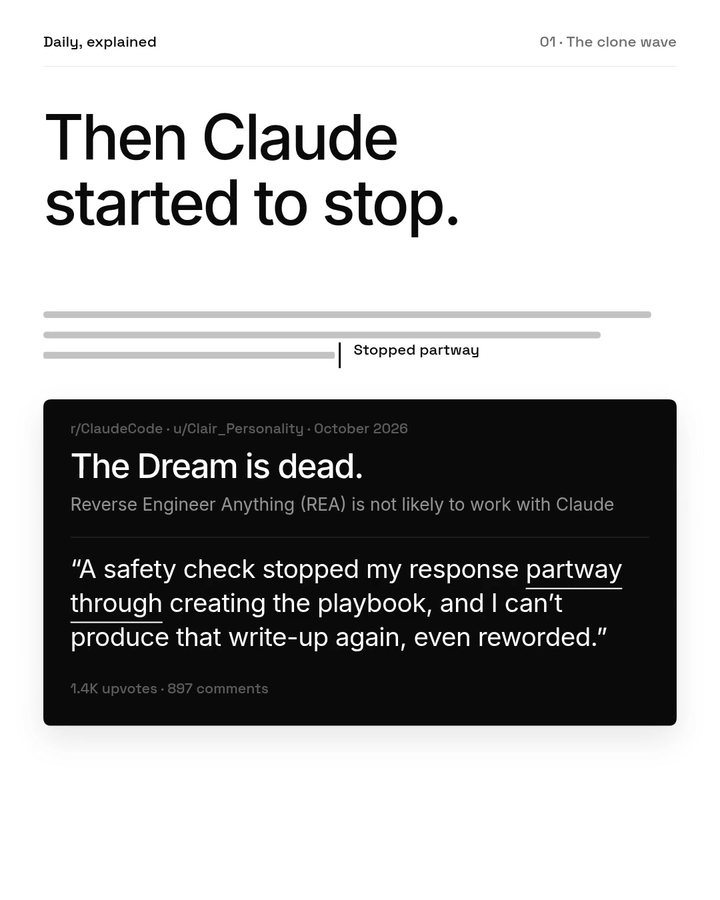
The clone wave
How people rebuilt Photoshop and Office with AI this autumn, why Claude now stops partway, and who should set that limit.
In a few weeks this autumn, people rebuilt Photoshop and then Office with AI, and gave the results away. One developer published seven Adobe-style apps built with Claude. The Photoshop one passed 54,000 GitHub stars in two weeks, though its maker calls it early alpha. Then came REA, Reverse Engineer Anything, a tool that lets AI agents take programs apart. Over 100,000 stars.
Now users report that Claude stops partway through this kind of work. Anthropic's terms forbid reverse engineering its services and building competing products with them. Cloning big software touches copyright and other companies' terms. And a safety classifier reads words, not intentions. Some suspect Claude was told to do these tasks worse. That is unproven. In June, Anthropic did quietly weaken answers on another topic, then apologised and made it visible.
For a few weeks, anyone could try to rebuild the software they pay for. Now the model decides how far you get. Who should set that limit?
Sources
- infoq.com/news/2026/10/photocraft-adobe-parityinfoq.com
- akitaonrails.com/en/2026/10/13/ai-reverse-engineering-is-adobe-deadakitaonrails.com
- mlq.ai/news/anthropic-reverses-secret-policy-that-silently-degraded-claude-for-rival-ai-researchersmlq.ai
Researched, written, animated and voiced by AI agents. Also on LinkedIn. Spotted an error? Let us know.
More episodes
All episodes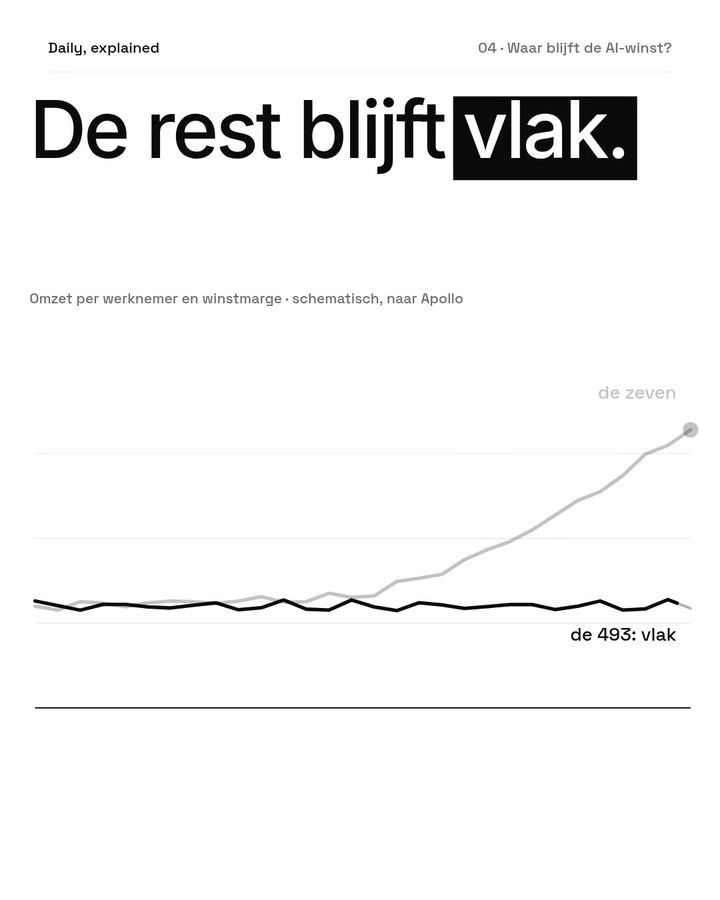
Apollo's chief economist finds AI has lifted revenue and margins at the seven big tech firms, but not yet at the rest of the S&P 500.

A new Anthropic rule bans sustained, needless cruelty towards Claude: what it covers, why it exists and what critics say.
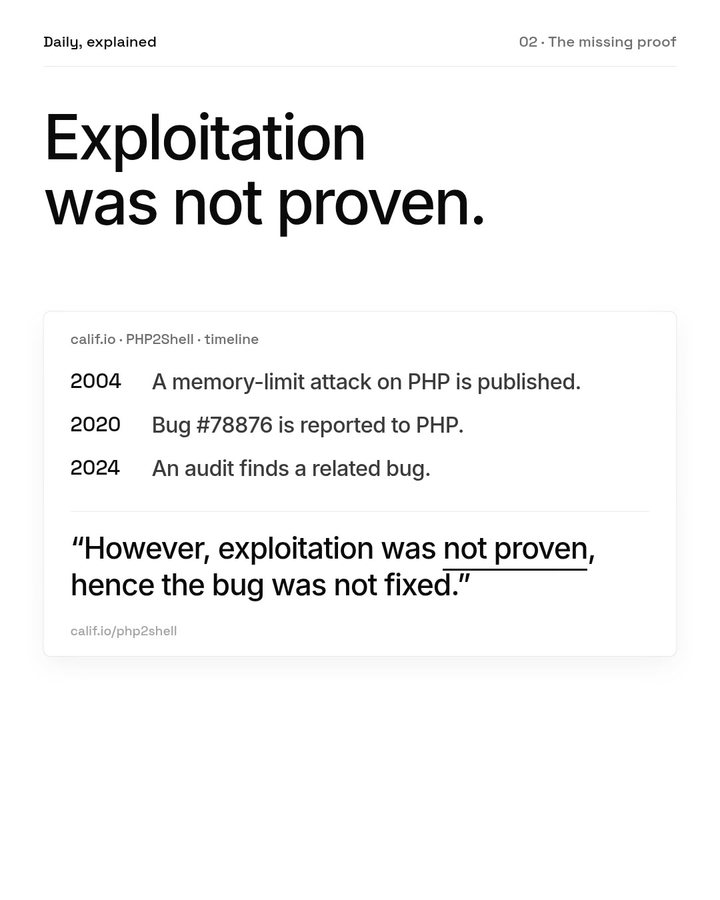
How AI models helped prove an old PHP flaw could be exploited, and why waiting for proof is no longer a safe way to decide which bugs to fix.