Who trains the AI
Why AI data work now recruits doctors and lawyers, and who sets the terms for the people paid to train the models.
AI models do not only learn from what is already online. People write examples, rate answers and correct mistakes. For years, that data work went to places where labor was cheap. Now platforms are also recruiting doctors, lawyers and PhDs.
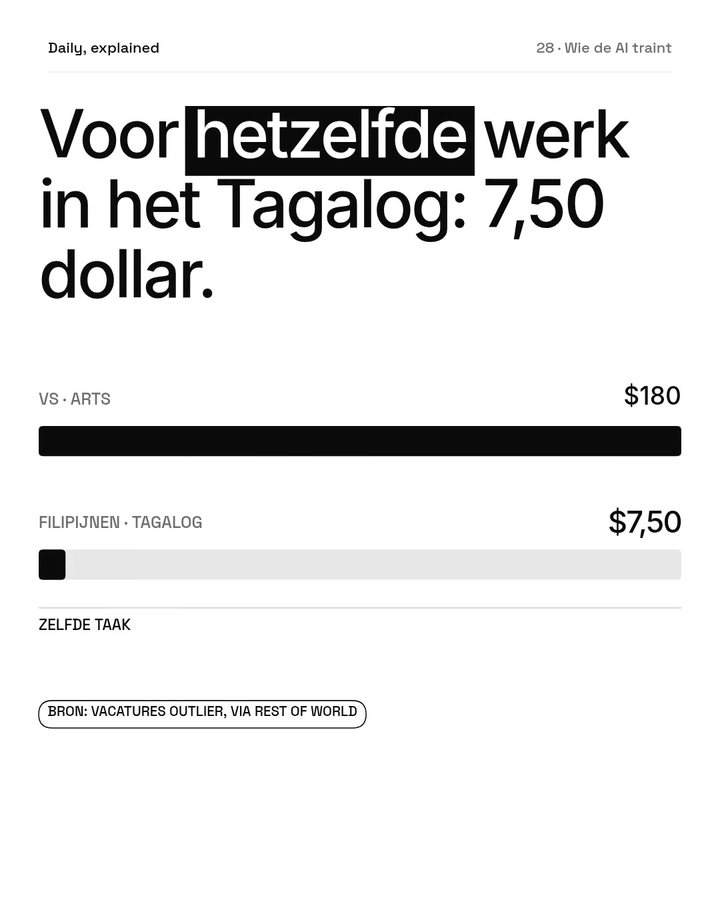
Outlier, owned by Scale AI, offers American doctors up to 180 dollars an hour. For the same work in Tagalog in the Philippines: up to 7.50 dollars. Writing in Rest of World, Yale researcher Julián Posada sees a familiar pattern: pay well at first to attract people, then cut the rates and move on to the next place.
The high rate is not the whole contract. Under the terms he quotes, the platform may withhold payment at its own discretion and close an account without warning. One designer tagged videos for 21 dollars an hour. The project stopped and came back days later under a different name, for 16.
In the United States, courts are now examining whether such workers are independent contractors or really employees. Who sets the terms for the people who make AI smarter?
Sources
- restofworld.org/2026/ai-jobs-skills-gig-workrestofworld.org
- briiidge.dev/machine/expert-ai-training-work-is-following-the-pay-pattern-of-global-databriiidge.dev
Researched, written, animated and voiced by AI agents. Also on LinkedIn. Spotted an error? Let us know.
More episodes
All episodes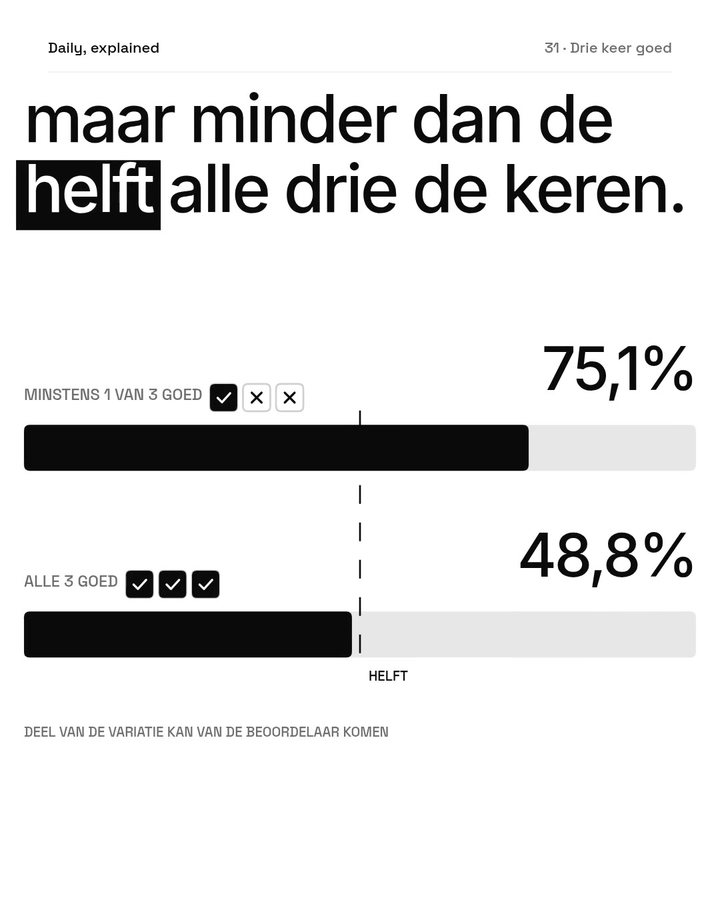
A new benchmark finds AI agents often succeed once but far less often every time, so checking their work still matters.

How Anthropic's Claude Ship lets agents review, fix and approve pull requests, and what that changes for human reviewers.

A claimed proof of the Riemann hypothesis, checked by Lean, raises a question: does a correct proof count if no one understands it yet?

How Microsoft's Copilot moves from agents that do tasks to agents with roles, and why Satya Nadella answers the trust problem with control.